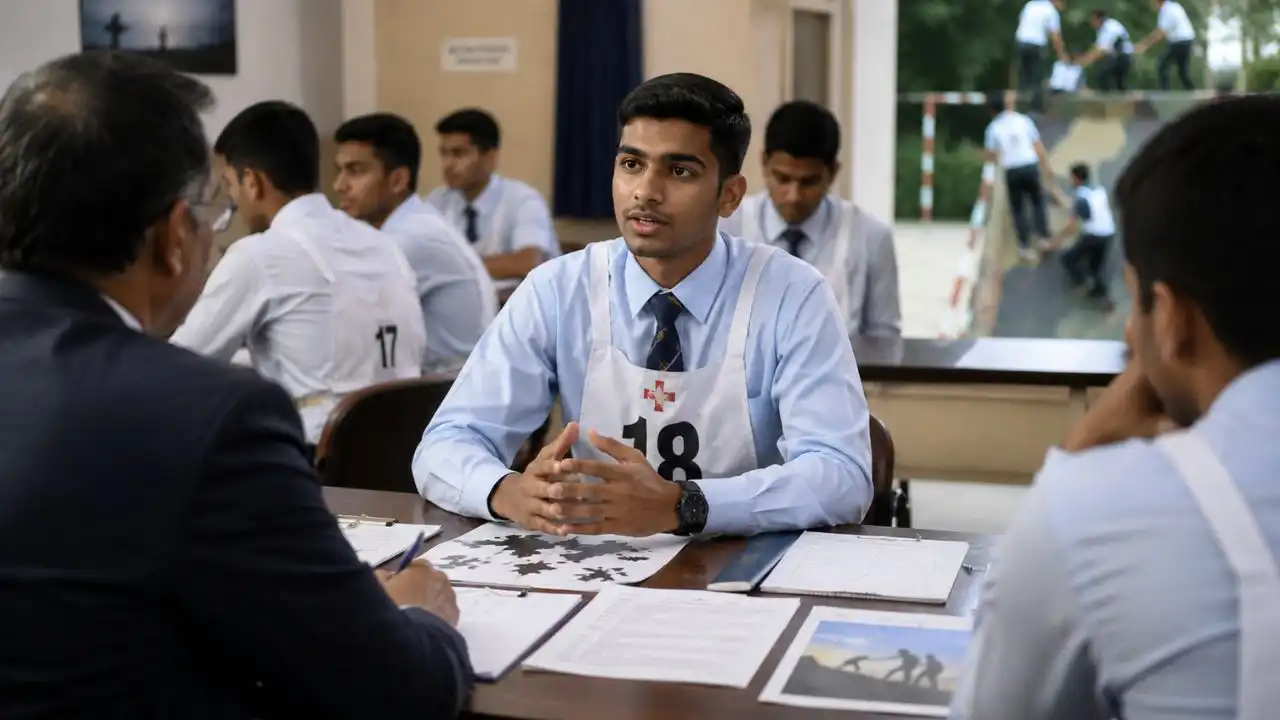
You cleared the written exam. You received the SSB call letter. Then you spent five days at the selection center, only to see a “Not Recommended” on the final day. If this has happened to you, you are not alone. Data from the Directorate General of Recruiting shows that nearly 92 percent of candidates who appear for SSB interviews across all centers get rejected. The written exam filters academic ability. The SSB interview filters something deeper, something most candidates never address in their preparation.
Table of Contents
You Are Preparing for the Wrong Interview
Most rejected candidates prepare by memorizing answers to predicted questions. They rehearse why they want to join the forces. They practice speaking confidently in front of a mirror. This is exactly what gets them rejected.

The SSB does not test your answers. It tests whether your personality matches the Officer Like Qualities the forces need. Memorized responses create a mismatch between what you say and how you behave during the Psychological Tests, Group Testing, and the personal interview. Assessors spot this disconnect within the first day.
Your preparation must focus on self-awareness, not scripted responses. Spend four weeks before your SSB dates journaling your actual reactions to stress, conflict, and responsibility. Write down situations where you led, where you failed, where you made quick decisions. The interview board will probe these exact areas through TAT stories, Word Association Tests, and situational questions during the interview.
Your Body Language Contradicts Your Words
Rejected candidates often show confident verbal answers but defensive body language. Crossed arms during Group Discussion. Avoiding eye contact during the Personal Interview. Fidgeting during the lecturette. The assessors watch how you enter the room, how you sit, how you react when another candidate contradicts you in GTO tasks.

The forces need officers who project natural authority without arrogance. You cannot fake this in five days. It must become your default state. Practice speaking while maintaining an open posture. Record yourself during mock Group Discussions and watch for nervous habits like touching your face, playing with a pen, or shifting weight between feet.
During the Conference round on Day 5, all assessors compare notes on behavioral patterns they observed across tests. A single confident performance in the Personal Interview cannot override four days of hesitant body language during outdoor tasks. Consistency across all testing situations is what gets you recommended.
You Overperform in Some Tests and Underperform in Others
Many candidates excel in the Personal Interview because they can control the conversation. Then they completely fail the Group Planning Exercise or Progressive Group Task because these tests reveal how you think under ambiguity and time pressure. The SSB is designed to catch this imbalance.

Each test targets different Officer Like Qualities. The Psychological Tests assess your subconscious responses. The Group Testing measures practical intelligence and social effectiveness. The Interview evaluates self-awareness and articulation. You need minimum qualifying performance in all three, not excellence in one and failure in two others.
Allocate your preparation time proportionally. Spend 40 percent on Psychological Test practice, writing 60 TAT stories per week and completing 200 Word Association Tests weekly. Spend 30 percent on physical GTO practice with a group. Spend 30 percent on structured self-reflection for the interview. Candidates who focus only on interview questions ignore 70 percent of the assessment.
You Misunderstand What Leadership Means in Military Context
Rejected candidates often describe leadership as giving orders or being the loudest voice in a group. They try to dominate every Group Discussion. They interrupt others during Command Tasks. This behavior flags you as someone who confuses aggression with authority.
Military leadership is about enabling the team to execute the mission, not about personal visibility. During the Half Group Task, assessors watch whether you listen before speaking. Whether you build on others’ ideas. Whether you step back when someone else has a better solution. Officers who cannot subordinate their ego to mission success become liabilities in operational environments.
Practice group tasks where you deliberately take supporting roles. Volunteer to implement someone else’s plan during mock GTOs. Learn to say “Your approach is better, let us execute that” without feeling diminished. This mindset shift separates confident candidates from insecure ones who need constant validation.
Your Stories and Examples Reveal Lack of Real Responsibility
When asked about leadership experience, many candidates describe organizing college fests or captaining a sports team. These examples are weak because they involve low stakes and temporary responsibility. Assessors probe deeper with follow-up questions you cannot answer convincingly if you lack genuine experience.
Between now and your SSB dates, take on real responsibility. Volunteer to manage a community project. Tutor underprivileged students and track their progress over three months. Handle a family crisis that requires you to make difficult decisions. The forces need officers who have already proven they can bear responsibility when failure has real consequences.
During the Personal Interview, you will face questions like “What was the hardest decision you made, and what did you learn from the outcome?” or “Describe a situation where your leadership failed.” Fabricated examples collapse under follow-up questioning. Lived experiences give you specific details and emotional honesty that assessors recognize immediately.
Comparison of Candidate Behaviors: Recommended vs Rejected
| Assessment Area | Recommended Candidates | Rejected Candidates |
|---|---|---|
| Psychological Tests | Stories show consistent problem-solving and team focus across all 12 TAT pictures | Stories shift between hero narratives and passive observations with no clear pattern |
| Group Discussion | Speak 3 to 4 times with substantive points, actively listen, summarize others’ views | Either dominate the discussion or stay silent, rarely build on others’ contributions |
| Group Planning Exercise | Propose practical solutions within resource constraints, consider multiple factors | Suggest impractical or incomplete plans, ignore time and resource limitations |
| Personal Interview | Answer with specific examples, admit knowledge gaps directly, maintain eye contact | Give vague responses, bluff when unsure, show defensive body language |
| Outdoor Tasks | Follow rules strictly, accept failure calmly, encourage struggling teammates | Bend rules to succeed, show frustration on failure, blame others for group setbacks |
You Treat the SSB as a Five-Day Event Instead of a Long-Term Filter
Rejected candidates arrive at the selection center hoping to perform well for five days. Recommended candidates arrive as people who have already developed Officer Like Qualities through months of deliberate practice. The SSB does not change who you are. It reveals who you have become.
If you receive a rejection, the standard advice is to “work on your personality” before reappearing. This is useless without specifics. Get your Conference Notes from the center within 30 days of your SSB. These notes tell you exactly which OLQs you lacked. If they note weak Social Adjustment, join group activities where you must collaborate weekly. If they note poor Effective Intelligence, practice solving real-world planning problems under time pressure.
The gap between attempts should be six months minimum. Use this time to build evidence of the missing qualities. Not by reading books about leadership, but by leading. Not by watching videos about confidence, but by placing yourself in uncomfortable situations repeatedly until they become comfortable.